Why slow summers matter
There is a particular kind of summer that happens without you quite meaning it to. The weeks fill up, the screen time creeps in, and by September you find yourself wondering where it went. We made the Summer Family Pack because we believe the antidote to that feeling isn’t a packed schedule – it’s attention. The simple habit of looking carefully at what’s already there.
A butterfly landing on a buddleia. A swallow skimming low over a field. A robin watching you from a branch while you eat your lunch outside. Summer is full of small, beautiful things that most of us walk straight past. This post is about slowing down enough to notice them.
Getting started: what you actually need
Nothing expensive. A quiet moment, a garden or a local park, and a child who is willing to stand still for thirty seconds.
The best wildlife spotters are patient and quiet – two things that are worth practising together. Make it a game rather than a lesson. Who spots something first? Can you get close enough to see the colour of its eye?
The Summer Wildlife Guide in our pack gives you nine species to look for – six birds and three butterflies – all common enough to spot on an ordinary UK summer walk. Here are a few of our favourites, and what to look for.
The robin
The robin is the easiest starting point – bold, curious, and almost entirely unafraid of people. If you’re digging in the garden, there will almost certainly be one watching. Look for the distinctive orange-red breast, which both males and females share. Robins are year-round residents, but summer is a wonderful time to watch them. They’ll often follow you around the garden hoping you’ll turn up a worm.
Fun fact for children: robins sing almost all year round, including in winter, which is unusual for a British bird.
The peacock butterfly
Of all the butterflies on our guide, the peacock is the one that tends to stop children in their tracks – and adults too, if they’re honest. The four vivid eyespots on its wings (blue, yellow, and black, one on each corner) are unmistakeable. Look for it on buddleia, nettles, and wildflowers on sunny summer days. It will often bask with its wings open flat, which makes it easy to see.
Fun fact for children: those eyespots aren’t just beautiful. They’re designed to startle predators. The butterfly can flash them open suddenly to frighten off a bird.
A few tips for wildlife spotting with children
Move slowly and quietly – most wildlife will stay longer if you’re not rushing toward it.
Look at the edges – birds and butterflies tend to be found at the margins of things: the edge of a hedge, the border of a meadow, the side of a path.
Notice the light – early morning and late afternoon are the best times for wildlife. Midday in full summer sun tends to be quieter.
Keep a record – the Feather Collection and Nature Hunt pages in the Summer Pack give children something to do with what they find, which makes the looking feel purposeful.
The Summer Family Pack
The Summer Wildlife Guide is one of ten pages in the Summer Family Pack – a gentle framework for planning, doing, noticing, and remembering the season together.
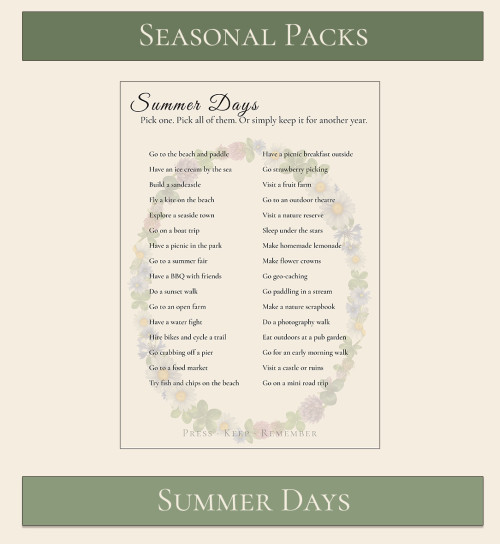
by Sarah
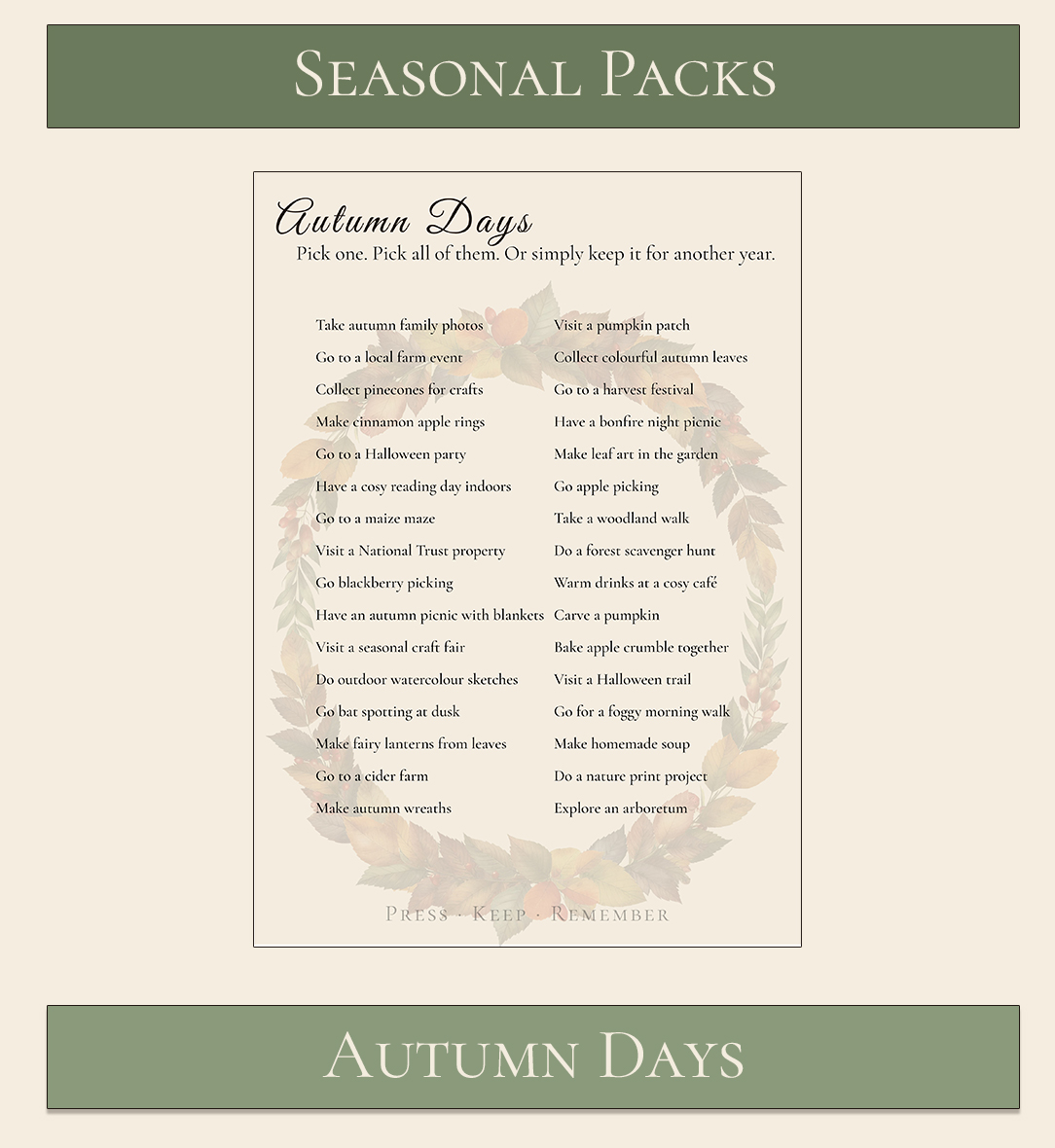
A ten-page printable pack for families who want to get outside, notice what autumn brings, and remember it when the season has passed.